Meeting Management’s Greatest Challenges

Apparently there are seven major challenges currently occupying the minds of business leaders and causing them concern. At least, that is what the conference speaker … Read more
Apparently there are seven major challenges currently occupying the minds of business leaders and causing them concern. At least, that is what the conference speaker … Read more

Most “disruptive” ideas – like the examples rejected by IBM – were first mooted internally. Their originators, however, had the conviction, determination and drive to pursue them and see them through to success, with the ultimate financial rewards that followed. We call that entrepreneurial spirit, but there is no reason why it has to occur outside the organisation. Supporting their development and offering the originator a royalty in return, creates the best of both worlds. It taps into the creative capabilities of your most important assets whilst simultaneously ensuring that results remain “in-house.” That, surely, is the ultimate win-win.

Who doesn't like a bonus? It is always nice to get more in your pay packet than usual. A bonus naturally make you feel good … Read more

I don’t know why. It is not a column I normally read. But somehow my eye was drawn to the report of a man who … Read more

Making your people brand ambassadors requires reversing this and focus on outcomes rather than outputs. In order to achieve this you need to make your people brand ambassadors for themselves. In other words, you have to close the divide between individual and organisation. The natural way to do this is to give your people a stake in the outcomes. And there is no better way to do this than through universal employee ownership that results in everyone in the organisation pulling together as a single entity. People need to feel appreciated and, by giving them some skin in the game, you can build this into everything they do, so that it is not an extraneous management process, but an integral part of the organisational culture.
I was shocked! And slightly disappointed in myself. In hindsight perhaps I shouldn’t have been, but I was – even though I suspect change professionals … Read more
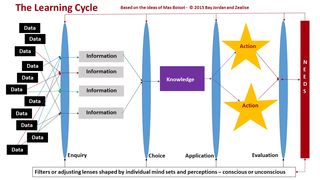
This is key: while you intuitively understand that your organisation is the aggregate of the people who work in it, you must consciously recognise that every person is an individual. Maximising your organisational learning means maximising individual employee learning. Thus creating a learning organisation, with an effective continuous improvement programme that secures your organisational development, necessitates ensuring you introduce mechanisms that will identify and circumvent the limiting effects of these filters. Your business demands nothing less.

The challenge posed thus provides a good starting point for the HR profession to challenge themselves. Not least because the report can be said to imply, from the very first requirements to be outstanding, that HR is itself confused and does not itself fully understand its own role.

We owe it to ourselves and future generations to get back on the right moral track. Employee ownership or ‘People’s Companies’ clearly offer a means to do this. So why not explore the ‘Every Individual Matters’ model as the way to deliver these?
Do you work in a dire workplace? The odds are that you do. At least according to Jeffrey Pfeffer, Professor of Organizational Behaviour at the … Read more