Transform Your Business Through More Effective Personal Reviews
There is an increasing tendency to do away with annual performance reviews. That is as it should be, for performance assessment should be an ongoing activity. It is also one that is most honestly done by the employee when the pressures of measurement and its consequences are removed. Career development, however, is not something the person can address unilaterally: it calls for a conversation. Managers still need to sit down with employees and ascertain to what extent they are growing and developing as people, how their work is contributing to that, and what needs to be done to provide and sustain that self-development.

Beware WIIFM: Avoid Its Present Dangers

Virtually unheard of ten years ago, WIIFM – the acronym for What’s In It For Me – has become a surprisingly popular term in business. … Read more

Transforming Human Resources

You likely heard the news late last week that the Shell share price rose 7% in response to the news that the company was cutting … Read more

Turning “Human Resources” into “Humane Resources”

Last week I wrote about the strange dichotomy in organisations: their dependency on people while generally failing to take any account of the intrinsic drivers … Read more

The Strange Dichotomy of Organisations and How to Bridge It

Thus, although coming from three totally different perspectives, all three of these writers reinforce one another’s conclusions. This makes their findings more credible, and more significant for you as a business leader. To significantly transform performance and results you have to create an environment that makes the best of your people or – more accurately – that allows them to make the best of themselves. For this you need to consider how you are going to create a system or systems that addresses the physical and psychological needs of your people. Both collectively and individually, because every individual matters.

The Paradox of Management and How to Remedy It

Nor is valuing people as difficult as history would have you believe. In fact it is the core of the ‘Every Individual Matters’ model. Valuing people as assets is the first step in the model and the foundation for building a culture that ensures optimal individual and organisational performance. After all, as Simon Sinek also says, “It is not the genius at the top that makes people great. It is great people that make the guy at the top look like a genius.”

Why you, unwittingly, may be just going through the motions

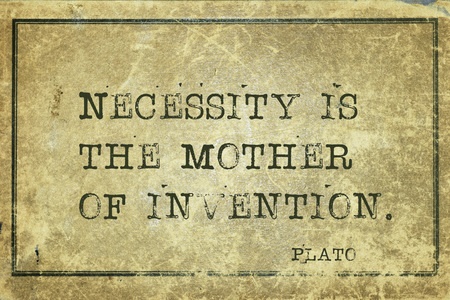
If you want to change this and turn things around to fully engage employees and optimise their effectiveness you have to find a way of changing the employee’s relation to their work. This essentially means that you have to create an environment where your employee is not working to “make someone else’s goals come true.” The only way you can do that is to create an environment of shared goals, where your goals and the employee’s correspond. That is the necessity. You have to ‘make your business their business’ – there simply is no other way to resolve this fundamental problem.

Big Data Demands ‘Big’ People

Whatever data our computers generate, the determination of requirements, and the uses to which it is put, are all shaped by humans. This demands great insight, sensitivity and balance if it is to be put to effective use. Thus you need ‘big’ people if you are going to optimise your big data.

How You Overcome That Great Fear

Most “disruptive” ideas – like the examples rejected by IBM – were first mooted internally. Their originators, however, had the conviction, determination and drive to pursue them and see them through to success, with the ultimate financial rewards that followed. We call that entrepreneurial spirit, but there is no reason why it has to occur outside the organisation. Supporting their development and offering the originator a royalty in return, creates the best of both worlds. It taps into the creative capabilities of your most important assets whilst simultaneously ensuring that results remain “in-house.” That, surely, is the ultimate win-win.