Beating the Crisis of Ethics

Flavour of the past week has undoubtedly be the question of ethics. Editorial comments have abounded and most, if not all, the newsletters I have … Read more
Flavour of the past week has undoubtedly be the question of ethics. Editorial comments have abounded and most, if not all, the newsletters I have … Read more

Ultimately change requires vision, and vision is the initial prerogative of few. It is the visionary who conjures a different future. Yet,without entrenched power, they must win “popular opinion” to realise it, because the majority only accept the need for change when the status quo becomes unbearable.

So beware prejudice governing you and your actions. Even more importantly, ensure prejudice is not stifling your organisation. Make sure all your people have a clear vision of what you are trying to achieve and that they listen and help one another “to be the best they can be.” After all, isn’t that what personal fulfilment really is? And that is the best guarantee of organisational success.

They say moving house is one of the most stressful experiences of life, apart from birth, death and marriage. I can certainly vouch for that … Read more

“Greatness is ultimately only extreme success.” Those words from my blog last week have stayed with me, perhaps because they make greatness less abstract and … Read more

Employee engagement provides a convenient heading for describing what you need, and some solutions for what can help. But unless you provide a framework that addresses both employees’ immediate and future needs your efforts will be doomed, and you will experience the same lack of strategic success that Harvard and Fortune describe.
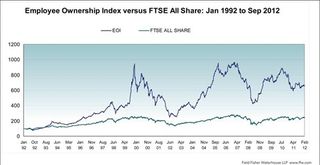
By offering employee ownership without equity the Zealise model provides a solution to all these limitations. It also offers an integrated participatory management approach that will ensure ownership in more than name and create the empowerment so essential to its ultimate success.
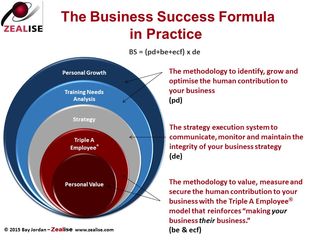
This very effectively illustrates the virtuous circle of the formula and the reinforcing aspect of its independent and inter-dependent elements. As people develop themselves they will increase their asset value, inevitably enabling them to make a greater contribution to the organisation and help execute strategy effectively. Note that, per the formula, disciplined execution is the multiplier and this will be boosted by their ownership stake which will make them more naturally inclined to do so.
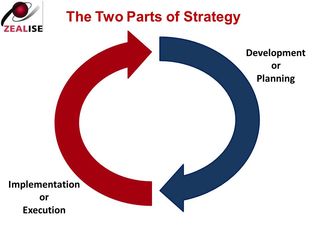
Only when you properly and fully align individual, team and organisational goals can you deliver a total strategy. Thus HR should play an essential role in executing strategy. If HR understands this, and can articulate it effectively, there should be no confusion about their role and the gap in understanding can be closed for once and for all.