Turning “Human Resources” into “Humane Resources”
Last week I wrote about the strange dichotomy in organisations: their dependency on people while generally failing to take any account of the intrinsic drivers … Read more
Last week I wrote about the strange dichotomy in organisations: their dependency on people while generally failing to take any account of the intrinsic drivers … Read more

Thus, although coming from three totally different perspectives, all three of these writers reinforce one another’s conclusions. This makes their findings more credible, and more significant for you as a business leader. To significantly transform performance and results you have to create an environment that makes the best of your people or – more accurately – that allows them to make the best of themselves. For this you need to consider how you are going to create a system or systems that addresses the physical and psychological needs of your people. Both collectively and individually, because every individual matters.
Nor is valuing people as difficult as history would have you believe. In fact it is the core of the ‘Every Individual Matters’ model. Valuing people as assets is the first step in the model and the foundation for building a culture that ensures optimal individual and organisational performance. After all, as Simon Sinek also says, “It is not the genius at the top that makes people great. It is great people that make the guy at the top look like a genius.”
If you want to change this and turn things around to fully engage employees and optimise their effectiveness you have to find a way of changing the employee’s relation to their work. This essentially means that you have to create an environment where your employee is not working to “make someone else’s goals come true.” The only way you can do that is to create an environment of shared goals, where your goals and the employee’s correspond. That is the necessity. You have to ‘make your business their business’ – there simply is no other way to resolve this fundamental problem.
Whatever data our computers generate, the determination of requirements, and the uses to which it is put, are all shaped by humans. This demands great insight, sensitivity and balance if it is to be put to effective use. Thus you need ‘big’ people if you are going to optimise your big data.

Apparently there are seven major challenges currently occupying the minds of business leaders and causing them concern. At least, that is what the conference speaker … Read more
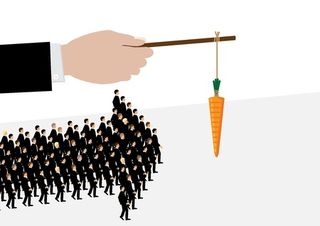
Who doesn't like a bonus? It is always nice to get more in your pay packet than usual. A bonus naturally make you feel good … Read more
I was shocked! And slightly disappointed in myself. In hindsight perhaps I shouldn’t have been, but I was – even though I suspect change professionals … Read more
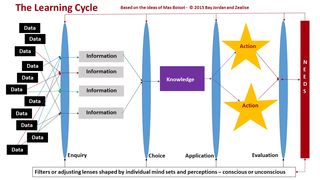
This is key: while you intuitively understand that your organisation is the aggregate of the people who work in it, you must consciously recognise that every person is an individual. Maximising your organisational learning means maximising individual employee learning. Thus creating a learning organisation, with an effective continuous improvement programme that secures your organisational development, necessitates ensuring you introduce mechanisms that will identify and circumvent the limiting effects of these filters. Your business demands nothing less.
The challenge posed thus provides a good starting point for the HR profession to challenge themselves. Not least because the report can be said to imply, from the very first requirements to be outstanding, that HR is itself confused and does not itself fully understand its own role.